
As health communicators we strive for the broadest possible comprehension and the highest levels of accessibility. Cultural competence is essential to achieve this. However, the solutions are understandably complex, and our work must consider a wide range of information needs.
In this article we discuss the role of cultural competence in improving health literacy and share three examples where we partnered with community organisations and other agencies in pursuit of more inclusive health communications.
Cultural competence in healthcare settings typically refers to a deep understanding of a particular cultural community to provide effective care that aligns with health beliefs, practices and values.[1] Similarly, providing access to health information is at the heart of people’s right to access healthcare and the right to freedom of expression and information, as recognised by the United Nations and the World Health Organization.[2]
Effective health communication is an essential part of delivering people-centered healthcare. By increasing levels of health literacy, we can empower individuals to make better informed decisions. It’s also instrumental to reducing inequalities in health care and associated outcomes by accommodating diverse communication needs and preferences.
During the early stages of the COVID-19 pandemic, research in Victoria identified poor health literacy and limited exposure to health education as contributing factors to vaccine hesitancy and lower uptake rates across a range of audiences in Western Melbourne. This trend was most acutely observed in socio‐economically disadvantaged areas where the largest multicultural communities are found.[3]
This finding highlights the importance of considering a range of factors when developing health communication resources for diverse communities across Australia. Making information available in a range of languages and using inclusive imagery is an important starting point. Equally important is understanding the cultural context in which the information will be received – how the message will reach the intended audience, how likely they are to engage with it, how it may be interpreted, and how it can help support individuals in making informed decisions about their health and wellbeing.
While forms of mass communication such as advertising aim to reach the widest possible audience and often rely on inclusive imagery to reflect cultural diversity, public relations offers a broader palette of tactics for delivering targeted messaging in a favourable context. We seek to understand the different cultural communication needs of target audiences, whether through on-the-ground research or strategic partnerships with community groups and agencies that specialise in multicultural communication.
For example, we were recently engaged by the Department of Health, Disability and Ageing to develop a suite of communication materials to provide tailored and culturally relevant information for First Nations communities, and resources for multicultural audiences about the free support offered through Medicare Mental Health services.
We worked with Carbon Creative to develop illustrations and artwork representing First Nations people for use across the tailored resources, and consulted with a local Primary Health Network (PHN) and Darwin Medicare Mental Health Centre for input and advice to produce a video featuring First Nations staff to highlight the benefits and culturally safe support available.
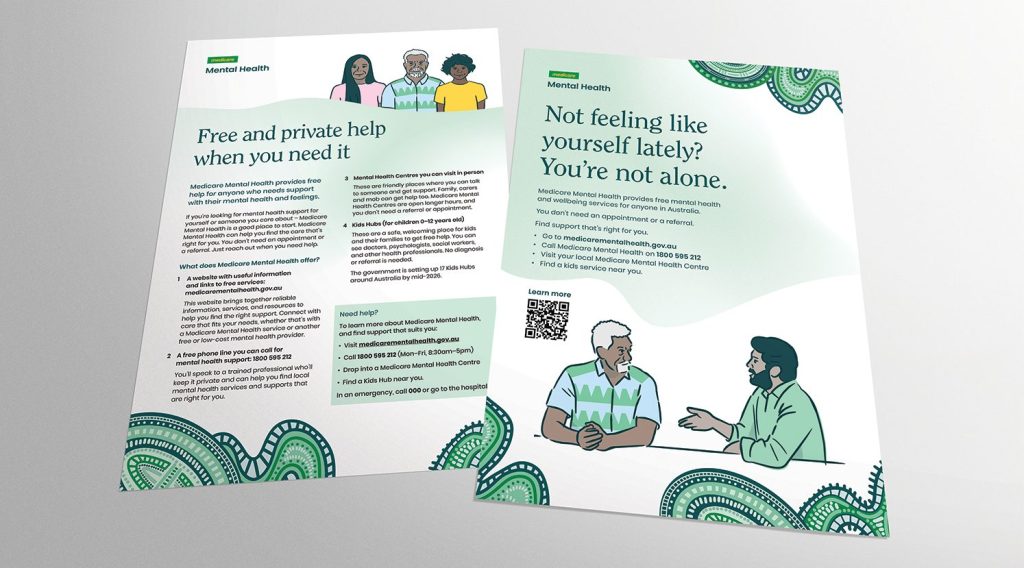
Fenton also engaged with multicultural organisations to share translated resources about Medicare Mental Health Centres and promote the Translating and Interpreting Service.
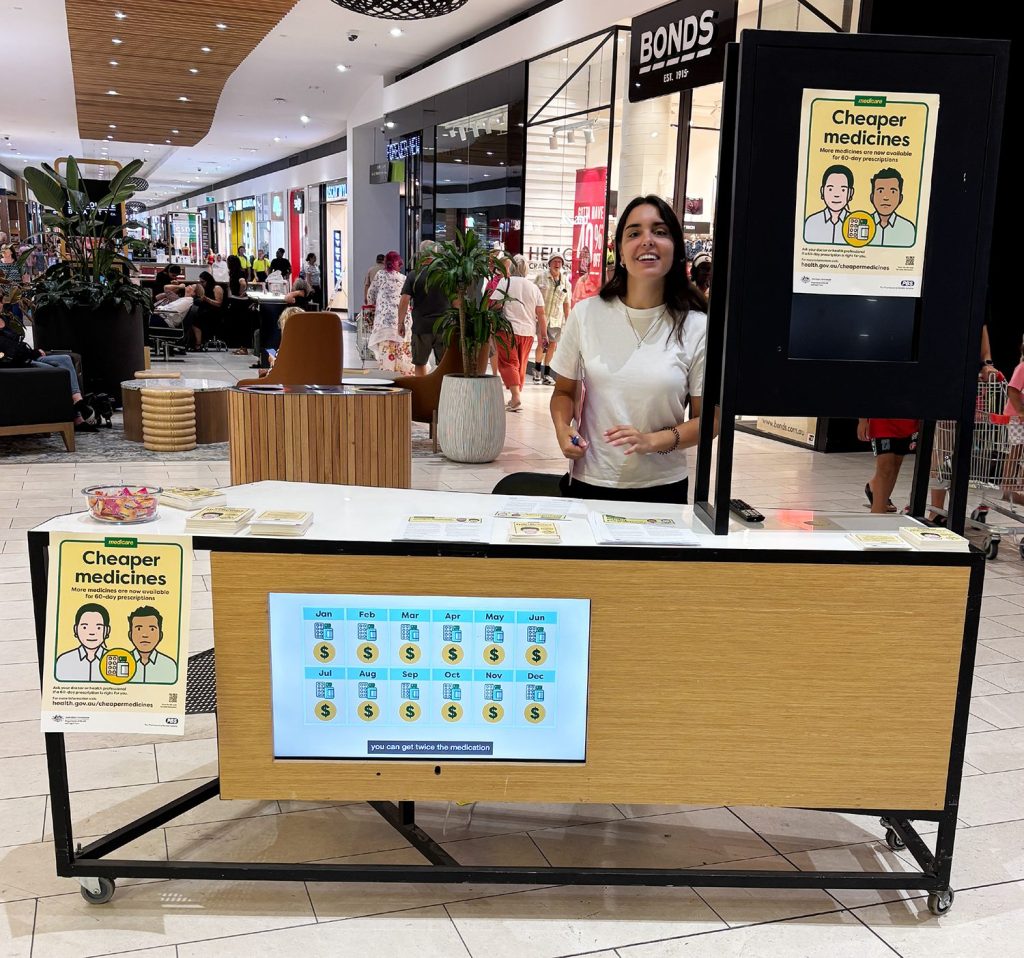
In delivering the national campaign to inform communities about the availability and cost savings of 60-day prescriptions, we set up information stands in shopping centres across Australia and worked with specialist multicultural communications agency Cultural Perspectives to have local language translators on hand to help ensure questions could be answered.
Our final example relates to multicultural participation in Victorian kindergartens. Multiple longitudinal studies have linked kindergarten attendance with increased wellbeing in children, particularly vulnerable communities.[4] In developing a comprehensive early years strategy for multicultural inclusion, Fenton consulted parents and carers from Vietnamese, Chinese and Somali playgroups to inform key messages and validate findings from existing research.
We recommended engaging local Somali community leaders and imams, to target ‘hard-to-reach’ cohorts where mistrust of government and lower levels of technology literacy can be barriers. We also worked with parents from a Somali playgroup to create in-language videos about the benefits of kindergarten that were shared across community Whatsapp groups.
You can view our case study on this project here.
By Alan Fitzpatrick
[1] So N, Rodrigues M. Cultural competency. In: Vashi NA, editor. Cultural practices and dermatoses. Cham: Springer International Publishing, 2021, pp. 115‐134.
[2] www.who.int/news-room/fact-sheets/detail/human-rights-and-health
[3] Dow A, Fowler M, Carroll L, Clun R. Most vulnerable, least protected — city’s west lags in jabs race. The Sydney Morning Herald 2021; 3 Aug. https://www.smh.com.au/national/most‐vulnerable‐least‐protected‐city‐s‐west‐lags‐in‐jabs‐race‐20210803‐p58fih.html (viewed Apr 2022).
[4] https://www.aihw.gov.au/reports/children-youth/learning-development-impact-of-early-childhood-edu/summary