In today’s world of email campaigns, anonymous online debate and virtual engagement, it can be easy to forget the value of sparking spontaneous in-person conversations. While written communication remains a PR staple for sharing information and ideas, the emotional and behavioural impact of a face-to-face interaction can be much more powerful.
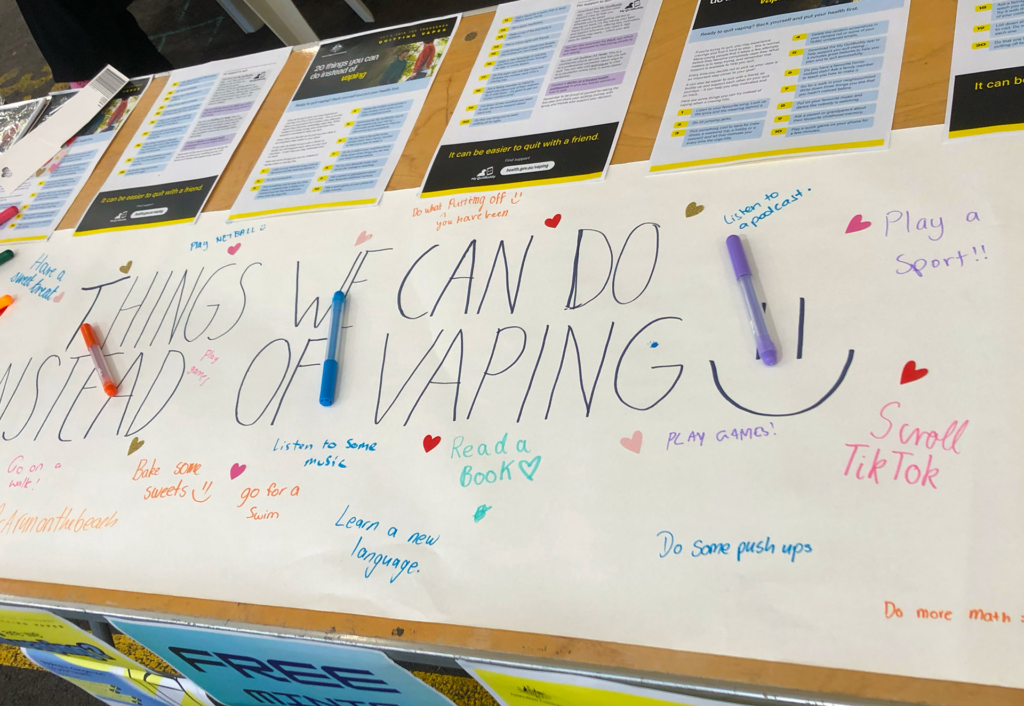
The Fenton team recently had the privilege of working with the Department of Health, Disability, and Ageing to deliver public relations for the national Youth Vaping Education Campaign. A key part of the strategy was delivering physical activations at youth-focused community events to connect with the target audience. The campaign aims to reach 14 to 24-year-olds, who are often receptive to new information, but the delivery must be memorable for the message to hit home. I was keen to be involved and fortunate to be part of the campaign activation team at both the Bring It On youth festival in Sydney (19 April 2026) – part of National Youth Week, and the NRL State of Origin Under 19s match at North Sydney Oval (18 June 2026).
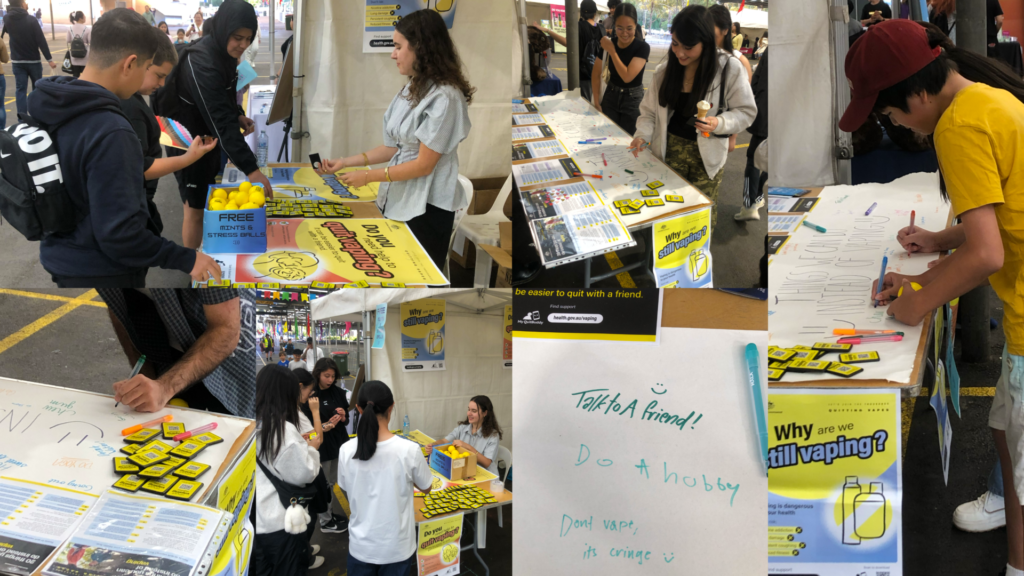
Our aim was to engage young people about the free support available to help them quit vaping and to promote campaign education resources. I was impressed by how many young people were comfortable approaching us, even just to say hi, and their eagerness to listen and learn. At the events we heard many stories of personal struggles with quitting, concerns for family and friends, and fielded a range of questions about the campaign. The success of the activations reinforced the impact and credibility you can achieve through personal conversation, particularly when combined with take-home information and resources.
Conversations also create an opportunity to get to know your audience better – a critical factor for anyone working in marketing or communications. The most important part of a discussion is listening – it builds understanding about who you’re talking to, and with a bit of patience, you can get to know their motivations, needs and barriers to behaviour change.
Through our conversations at the activations, a common theme emerged: “I want to quit but I don’t know where to start”. This simple idea is at the heart of the campaign approach, which aims to highlight the range of different support available to make quitting more achievable.
We found that the immediacy of face-to-face dialogue and the event setting often prompted young people to speak more openly, revealing details they probably wouldn’t have in a survey or email. The activations helped achieve increased downloads of the MyQuitBuddy app and campaign resources, and increased awareness of quit support services.
This experience reminded me of the value of human connection. After all, an important element of PR is to foster relationships. It’s undeniable that digital communications play an important role in building awareness, delivering large-scale reach and influencing attitudes. But despite the continual evolution of digital media, there remains something special in a shared conversation.
Read more about the Youth Vaping Education Campaign here.
View the campaign website here.
By Alexandra Krasic Krstevski